


Hello there! Welcome to Fiery Word
If you haven’t already done so, please subscribe to this newsletter. It is free and goes directly to your inbox when you subscribe.
Kindly take a second to subscribe and share with somebody today.
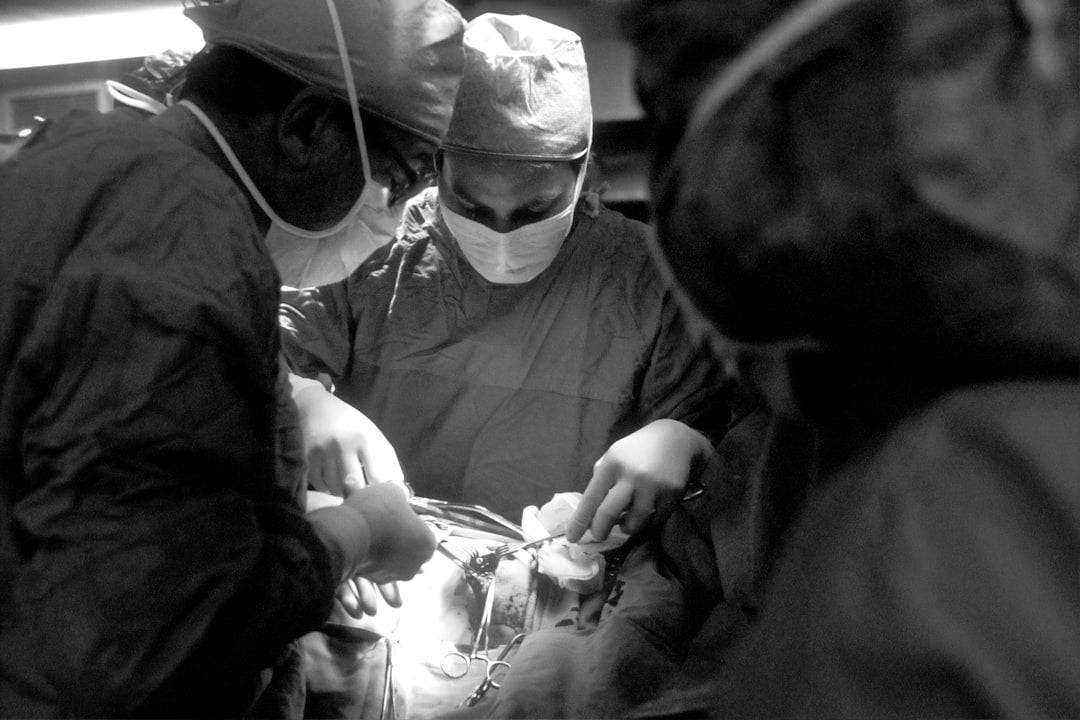
For in Christ all the fullness of the Deity lives in bodily form, and in Christ you have been brought to fullness. He is the head over every power and authority. In him you were also circumcised with a circumcision not performed by human hands. Your whole self ruled by the flesh was put off when you were circumcised by Christ, having been buried with him in baptism, in which you were also raised with him through your faith in the working of God, who raised him from the dead. (Colossians 2:9-12)
Christianity is not difficult because its commands are unclear, nor because God’s will is hidden. It is difficult because the human heart is divided. What pleases us and what claims us do not live in the same place. We are drawn toward the familiar satisfactions of the flesh, the quiet rewards offered by comfort, control, and approval, even as we sense, often painfully, that our deepest obligation belongs elsewhere. We know who God is and we know what He asks. Yet, between knowing and doing lies a distance that feels impossibly wide. This fracture, the place where desire pulls one way and devotion another, is the daily burden of the human soul. It is the ache beneath religious striving and secular distraction alike. We live with the knowledge of what we ought to love, while loving something else, and the tension slowly wears us thin.
This inner conflict is not reserved for the religious. Scripture tells us that even those who have never named God still carry the echo of His law within them. There is a quiet knowing woven into the human conscience, a sense that life is meant to bend toward something higher than appetite or instinct. We feel it when we act against our own better judgment. We feel it when success leaves us hollow and pleasure fades too quickly. The heart bears witness against itself. We may silence it, redefine it, or drown it out with noise, but the misalignment remains. Something in us knows we were made for more than what we reach for, and that knowing becomes its own form of grief. It is not ignorance that troubles us most, but the awareness that our loves are disordered and our lives are bent away from the God we were formed to reflect.
God does not answer this grief with better rules or louder demands. He does not attempt to manage the distance between desire and duty. He moves to remove it. In His mercy, He goes beneath behavior and reaches for the heart itself. Scripture gives this work a name that is as unsettling as it is precise: circumcision. Not of the body, but of the inner life. A cutting away of what once ruled us. A decisive separation between the self once governed by the flesh and the life now hidden in Christ. This is not moral adjustment, nor spiritual motivation, it is intervention. God does not ask the divided heart to choose Him more sincerely. He offers to change what the heart desires in the first place.
Circumcision first appears in Scripture not as a suggestion, but as a covenant mark. It was given to Abraham as a sign that life with God would be sealed in flesh and blood, not sentiment or intention. The image is deliberately uncomfortable. It speaks of loss before fruitfulness, of pain preceding promise. Something of the natural body had to be cut away for a people to be set apart. Covenant, from its earliest expression, required a wound. God was teaching His people that belonging to Him would never be achieved by refinement of desire, but by the removal of what ruled it. What was cut away was not incidental. It was the seat of reproduction, the source of future generations, declaring that even what we produce must flow from surrender, not self-governed life.
Throughout Scripture, God returns to this promise again and again, not to soften it, but to clarify it. Through the prophets He speaks of a new heart given, not repaired, of stone removed and flesh restored. He promises a Spirit poured out, breath where there was once only striving. Jesus names it being born again, born from above, a beginning that does not trace its origin to human effort or religious lineage. All these words circle the same mystery. God does not tame the old nature, He replaces its authority. The problem was never that we lacked resolve, but that our desires were governed by something hostile to life. So God acts where we cannot. He does not ask the heart to transform itself. He enters, cuts, removes, and gives what only He can give.
This promise reaches its fullness in Christ. He does not merely teach about the new heart, He bears the cost of it. Jesus Himself is cut. Pierced in flesh, opened in blood, marked by covenant wounds not His own. On the cross, the sign given to Abraham is fulfilled in a way no one expected. The cutting away no longer falls on humanity, but on the Son. As His body is broken, sin is severed from those who are joined to Him. In His death, the rule of the flesh is put off. In His burial, the old self is laid in the ground. And in His resurrection, a new life governed by God’s Spirit is raised in its place. What circumcision once signified, the cross accomplishes.
When this work takes root in the believer, obedience is no longer carried as a weight but received as a gift. The commands of God do not disappear, but they are met by a changed appetite. What once felt like a dreadful obligation begins to reveal itself as the very source of life. This is not the discipline of gritted teeth, but the awakening of love. To love God cannot be sustained by duty alone. His greatness will not tolerate coerced affection. Love that endures must rise from desire, and desire is born where the heart has been circumcised. This is why the psalmist can speak without irony, saying he delights in the law of the Lord. Delight is the language of a heart no longer ruled by the flesh, but governed by the Spirit, where what God requires has become what the soul most deeply wants.
At the cross, pleasure and duty, once strangers and rivals, finally meet. They do not reconcile through compromise, but through crucifixion. As Christ is lifted, pierced, and held between heaven and earth, the old division is judged and put to death. What demanded obedience without joy is nailed there. What chased pleasure without truth is nailed there. In His wounds, the believer is circumcised, cut free from the tyranny of disordered love. From that place, a new union is born, where obedience is no longer extracted but desired, and joy is no longer fleeting but anchored in God Himself. This union begins now, quietly, imperfectly, yet truly, and it stretches forward toward the day when faith gives way to sight. On that final day, when we see Christ face to face, pleasure and duty will no longer wrestle within us. They will rest together, fully and forever, in the presence of the One who made them one at the cross.
Prayer for a Circumcised Heart
Heavenly Father,
I come to You aware of the divided places within me, where desire and devotion have not yet learned to dwell together. I ask You to do what I cannot do for myself, to cut away every rule of the flesh that still governs my loves.
Circumcise my heart by Christ, not to wound me without hope, but to free me for life. Where I have obeyed from duty alone, awaken righteous desire, and where I have chased pleasure apart from You, bring it to rest at the cross.
Let what You require become what I delight in, not by striving, but by Your Spirit at work within me. I yield to Your hand, trusting that what You remove is never greater than what You give.
In Jesus’ name.
Amen.