


Hello there! Welcome to Fiery Word
If you haven’t already done so, please subscribe to this newsletter. It is free and goes directly to your inbox when you subscribe.
Kindly take a second to subscribe and share with somebody today.
So Jesus said to them, “Because of your unbelief; for assuredly, I say to you, if you have faith as a mustard seed, you will say to this mountain, ‘Move from here to there,’ and it will move; and nothing will be impossible for you. However, this kind does not go out except by prayer and fasting.” (Matthew 17:20-21)
“Because of your unbelief.”
Jesus does not rebuke the demon first. He turns to His disciples. They had walked with Him, heard His teaching, witnessed authority bend what seemed immovable. Yet when confronted with darkness, they stood powerless. Their failure was not due to lack of exposure, but lack of dependence. Proximity to Christ had not guaranteed reliance upon Him. They had tasted authority, but somewhere along the way, intimacy had thinned. And Christ names it plainly, without spectacle and without condemnation. The verdict is one word: unbelief.
What makes this rebuke so penetrating is its theological precision. These were not unbelievers failing to perform. They were disciples failing to abide. The failure was not positional but relational. It was a loosening of the union from which all authority flows. Jesus had already named this architecture in the upper room: “Apart from me you can do nothing” (John 15:5). Not some things. Not the harder things. Nothing. What the disciples encountered on that mountain was not a demon too strong for them. It was proof that they had begun to function outside the branch’s dependence on the vine.
This is the quiet danger for those who live in proximity to holiness. We can speak the language of faith while neglecting the life that sustains it. We can rehearse testimonies from yesterday and assume they will carry weight today. We can move in ministry rhythms while slowly withdrawing from the altar. The result is subtle but serious. We become active, informed, engaged, yet inwardly fragile. We carry vocabulary without vitality and attempt what only God can accomplish while prayer becomes occasional rather than essential.
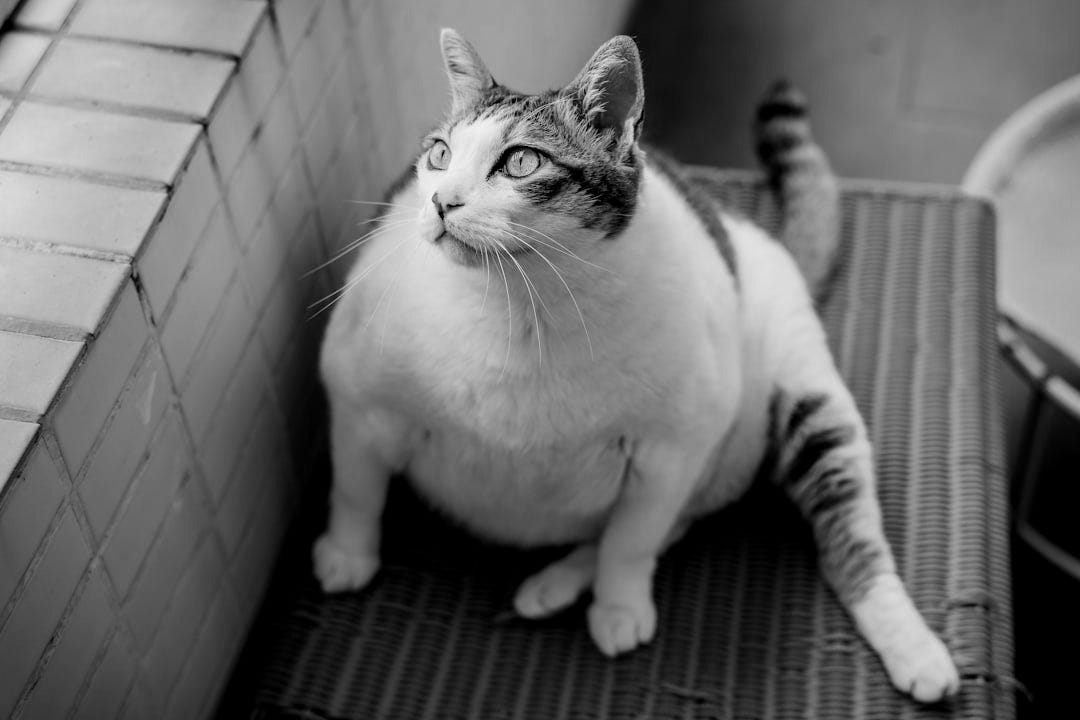
The bloated believer is not empty of content. He is full of sermons, perspectives, strategies, convictions. Yet beneath the fullness lies weakness. A bloated body is not starving. It is misnourished, swollen yet lacking strength. So it is with a faith that consumes more than it communes. We gather more than we linger, discuss more than we intercede, and when the mountain refuses to move, we are left searching for techniques instead of returning to dependence.
Jesus continues, almost gently, “This kind does not go out except by prayer and fasting.” The hidden life is none other than prayer. It is the descent that makes room for God to rise within us. Faith does not survive on familiarity but breathes through surrender. When prayer weakens, unbelief rarely shouts. It settles quietly, like dust on unused altars. And mountains remain where kneeling has grown rare.
Beneath our neglect of prayer, something more revealing stirs than a scheduling problem. We do not abandon the altar merely because we are busy, but because somewhere faith has thinned into assumption. At times we quietly wonder whether God will truly answer. At other times, we assume we can manage what stands before us. Both confessions are seldom spoken aloud, yet they shape our habits. When we believe the outcome rests finally in our hands, prayer feels supplemental. When we doubt that heaven will respond, prayer feels optional.
Paul names this condition with surgical precision. In Romans 8, he draws the line not between the religious and irreligious, but between those who live kata sarka (according to the flesh) and those who live kata pneuma (according to the Spirit). The flesh, in Paul’s framing, is not merely moral failure or physical weakness. It is the self organized around its own resources, its own estimation, its own competence. And here is the danger: a believer can adopt the vocabulary of the Spirit while remaining structurally kata sarka, still operating from the self outward rather than from God downward. This is the theological root beneath the bloat. Not rebellion, but a quiet reorientation. Not hostility toward God, but subtle self-sufficiency. We say we trust Him, yet we calculate as if everything depends on us. We speak of surrender, yet rarely descend into the stillness where surrender is formed.
God is not offended by weakness but drawn to it. What resists His grace is not frailty, but self-reliance. The bloated believer is not openly rebellious. He is quietly autonomous. He has learned to function without first abiding. And where abiding weakens, authority fades. This is not a failure of discipline alone. It is a failure of orientation. The question is never whether we are doing enough. It is whether we are drawing from the right source.
Jesus had already spoken this tension in Gethsemane: “Watch and pray, that you may not enter into temptation. The spirit indeed is willing, but the flesh is weak.” He was not exposing hypocrisy. He was unveiling the human condition. There is within us a genuine desire for God, a longing to be faithful, courageous, steadfast. Yet there is also a frailty that resists discipline and avoids descent. We admire prayer, we intend to pray, we speak about prayer. But to pray is to come low. It is to admit need before results are visible, to confess that without Him, we cannot move what stands before us.
The flesh resists this confession. It prefers motion over kneeling and strategy over surrender. So we live in the tension of willing spirits housed in weak frames. This is why prayer must be chosen, not assumed. It is not sustained by intention alone, but by humility. Authority in the kingdom does not rise from intensity, but from intimacy. Intimacy is not built in public victories but in private yielding, and when we neglect that hidden place, faith grows thin even while our schedules remain full.
And fasting is not incidental here. It is not a religious habit appended to prayer as a spiritual multiplier. Fasting is an embodied theology. When we fast, we enact in the body what we confess with the mouth: that man shall not live by bread alone. Isaiah saw through the hollow fasting of Israel’s religious elite; the rituals remained while the life of dependence had emptied out (Isaiah 58). True fasting is not about impression. It is about vacancy, emptying what has crowded out the holy and creating space for what only God can fill. To fast is to let the body join the soul in its confession: I cannot sustain myself. The bloated life must be thinned from both directions, through prayer that opens us upward and through fasting that empties us inward.
The solution is not striving harder for visible outcomes. It is returning to the quiet place where strength is exchanged. The mustard seed Jesus speaks of is small, certainly unimpressive. It carries no spectacle, no grandeur. Yet it lives because it is planted. It yields because it is surrendered to soil. God has never required impressive faith. He has only ever required dependent faith. The mountain does not move because the believer is large. It moves because the believer is leaning.
From bloat to brokenness is not a journey of shame, but of relief. To kneel again is to breathe again. To fast is to empty what has filled us with substitutes. To pray is to let faith inhale the presence of God. And where dependence is restored, mountains begin to tremble.
So the invitation before us is not dramatic, but decisive. We are not being summoned to louder declarations or more aggressive striving. We are being called back to the altar. Back to the place where faith is not performed but formed. The bloated life must give way to the yielded life. The heavy soul must become light again through surrender. What we have layered onto ourselves through noise, ambition, and subtle independence must be laid down willingly.
The disciples did not need new methods. They needed renewed communion. And we are the disciples of this age and time. This is also a corporate reckoning. The disciples failed together on that mountain, not as isolated individuals but as a community that had grown collectively self-sufficient. A church swollen with self cannot carry the weight of glory. A people crowded with noise cannot discern the whisper of the Spirit. But a community that returns to prayer, that fasts not to impress but to empty, that kneels not out of ritual but reliance, becomes a vessel through which heaven breathes again.
Mountains do not tremble at our volume. They tremble at surrendered faith. Surrendered faith is born where believers choose the hidden place over the visible one. The way forward is not upward striving, but downward yielding. As we decrease, Christ increases. As we empty, He fills. As we bow, He moves. So let the Spirit search us. Let Him expose the quiet independence we have called maturity, the kata sarka buried beneath spiritual language, the self-sufficiency dressed in theological confidence. Let Him thin what has swollen and soften what has hardened. The remedy is not shame, but return. Not performance, but prayer. Not inflation, but intimacy.
The question is no longer whether mountains exist. They stand before every generation in different forms: unbelief in a home, compromise in a church, fear in a heart, addiction in a life that feels beyond recovery. The question is whether we will become light enough in spirit to see them move. Mountains remain immovable where prayer is irregular, but they begin to shift where believers choose to descend. The kingdom does not advance through inflated confidence, but through kneeling hearts. Down is not defeat in the economy of God. It is alignment, clarity, and rediscovered strength.
If we want to see what seems impossible bow, we must first bow ourselves. Before speaking to mountains, we must first speak with God. The cure for bloated faith is not spiritual busyness. It is total dependence. When this dependence is restored, even mustard-seed faith becomes weighty enough to move stone. When the altar burns again, mountains will not remain where they are.
So we pray:
Heavenly Father,
We come before You aware of how easily we become full of everything except dependence. Forgive us for the quiet unbelief that hides beneath activity, for the prayerlessness we have excused as maturity, and for the independence we have mistaken for strength. Where we have relied on ourselves, bend us low again. Where our altars have grown cold, breathe on the embers.
We confess that we cannot return to You by our own resolve. Even the hunger for the hidden life is Your gift. So we ask not merely for discipline, but for desire. Make the secret place feel like home again. Make kneeling feel like relief rather than obligation. Thin out what has swollen within us, strip away every substitute that has crowded out communion, and give us again the simplicity of mustard-seed trust.
We know the flesh will rise again. We know the temptation to manage what only You can move will return in new forms. So we ask not only for the grace to descend today, but for the grace to keep descending. Hold us low when we would rather stand in our own strength. Keep us near when familiarity would tempt us to drift.
Make us a people light enough to be moved by Your Spirit and surrendered enough to see You move through us. Let our authority flow from intimacy and our confidence rise from prayer. Draw us back to the altar, and what begins as obedience, let it become delight.
In Jesus’ name.
Amen.