


Hello there! Welcome to Fiery Word
If you haven’t already done so, please subscribe to this newsletter. It is free and goes directly to your inbox when you subscribe.
Kindly take a second to subscribe and share with somebody today.
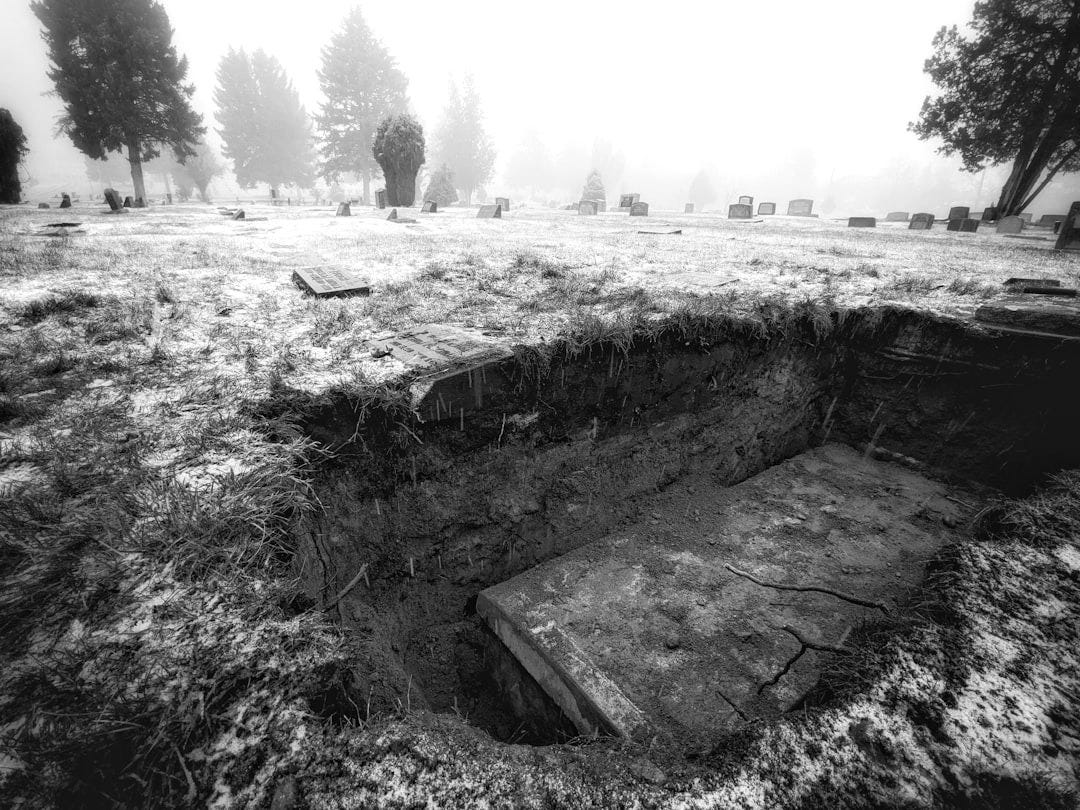
“God raised him up, loosing the pangs of death, because it was not possible for him to be held by it.” — Acts 2:24
The Day the Story Goes Dark
Easter Saturday has almost nothing written about it.
Matthew moves from the burial to the setting of the guard. Luke notes that the women rested according to the commandment. John does not record the day at all. The Gospel writers, who had followed Jesus from Galilee, who had witnessed the feeding of thousands and the raising of Lazarus and the transfiguration on the mountain, had nothing to say about the hours between the sealing of the tomb and the rolling away of the stone. Not because nothing was happening but because nothing was visible.
The disciples went home. The women prepared spices and waited. The religious leaders congratulated themselves on a problem resolved. Rome posted a guard at the entrance to a tomb it did not believe contained anything dangerous. The world continued in the flat, dull grammar of ordinary time, as though the matter were settled, as though what had been placed in that borrowed cave on Friday afternoon were simply a body, subject to the same laws as every other body, already beginning its slow return to the dust from which it had come.
It looked like an ending. It had the texture of an ending. The disciples who had walked away from the cross were not hiding in the upper room in expectation. They were hiding in grief. The story, as far as anyone standing inside it could see, was over.
This is the surface of those three days. What the surface concealed is what the Church has largely left unpreached, rushed past in the liturgical movement from Good Friday to Easter Sunday as though Saturday were merely waiting, merely silence, merely the held breath between the death and the resurrection. But it wasn’t. Something was happening beneath the sealed stone that had never happened before in the history of the world, and it was happening in a place where no one could follow.
The Deepest Descent
Peter stands up on the day of Pentecost and says something the crowd is not prepared for. He does not simply announce that Jesus rose from the dead. He tells them how: God raised him up, loosing the pangs of death, because it was not possible for him to be held by it. The word he uses for pangs is odinas, birth pangs. Not the grip of a prison. Not the sentence of a judge but Birth pangs. Death was in labor and it could not hold Jesus because what was happening inside it was not containment. It was gestation.
But before the birth, the descent. And the descent was real and it was deep.
1 Peter 3:18 does not allow us to skip this. Christ suffered once for sins, the righteous for the unrighteous, that he might bring us to God, being put to death in the flesh but made alive in the spirit, in which he also went and proclaimed to the spirits in prison. He went somewhere. The spirit of Jesus, after the body was taken down from the cross and laid in the tomb, was not in peaceful suspension waiting for Sunday morning. He descended into the realm of the dead, and He went there not as a spectator but as the one who was completing, in the spirit realm, what the cross had begun in the visible world.
Psalm 88 is the scripture most preachers leave unattended, and it may be because it is the most uncomfortable passage in the Psalter. There is no resolution at the end of it. No turn toward hope. No final declaration of trust. It ends in darkness. Commentators have long noted that it reads like the interior experience of a soul in Sheol, and several early interpreters understood it as a prophetic picture of what Jesus endured in those three days. My soul has arrived at Sheol. I am like one who has no strength. I am a man without God. In the lowest pit, in the pit of dense darkness. Thou hast let all thy waves strike upon me. I am distracted. I am brought low. I have borne thy terrors.
Sin is not a physical thing. It is a spiritual condition, the state of being alienated from God, cut off from the source of life, existing in the darkness that is not merely the absence of light but the presence of everything that God is not. For Jesus to bear sin completely, He had to go where sin goes. A substitution that cost Him only physical suffering would have been a substitution for the wrong thing. What killed Adam was not physical pain. It was spiritual death, the severing of the union between the human spirit and the life of God. To reverse it, Jesus had to enter it. To pay it, He had to experience it. He who had never known the silence of God heard nothing else for three days.
This is the station in the arc of redemption that has no witnesses. The cross had the women, and John, and the crowd. The resurrection had the angel and Mary in the garden. The three days had no one. He went where we could not follow, into a darkness so complete and a suffering so interior that the only record we have of it is in the prophecies written centuries before it happened, by men who saw it from the outside and could not fully name what they were seeing.
The Birth
Then the Father spoke.
Acts 13:33 quotes Psalm 2 as being fulfilled in the resurrection: You are my Son, today I have begotten you. The verse Paul cites is not the verse we expect at an empty tomb. We expect vindication language, triumph language, the language of a prisoner released or a verdict overturned. Instead we get a birth announcement. Today I have begotten you. Not merely, today I have raised you. Today you have been born.
Paul calls Jesus the firstborn from the dead in Colossians 1:18. John echoes the title in Revelation 1:5. The word is prototokos, first-born, prototype, the first instance of a new order of being. He was not simply the first person to be raised from the dead. Lazarus was raised before Him. The widow’s son at Nain was raised before Him. What distinguished the resurrection of Jesus was not its sequence but its nature. He was raised into an indestructible life, a life that death had already tested from the inside and could not hold. He was made alive in the spirit, 1 Peter 3:18 says, and 1 Timothy 3:16 adds that He was justified in spirit. Something happened to Him in those three days that made Him categorically new, the head of a creation that had not existed before, the firstborn of many brothers.
And the moment He was justified and made alive, Colossians 2:15 tells us what followed. Having disarmed the rulers and authorities, he put them to open shame, by triumphing over them in him. The Greek is vivid and almost violent: he stripped them, he made a spectacle of them in front of the assembled hosts of darkness. He walked out of the place where they had held humanity for generations and He walked out holding the keys. I was dead, He tells John in Revelation 1:18, and behold I am alive forevermore, and I have the keys of death and Hades. Keys represent authority. The one who holds the keys decides who enters and who leaves. Death was no longer a sentence that could be passed on the children of God without appeal. Its authority had been stripped by the One it could not hold.
He did not conquer death for Himself. He had nothing to fear from death on His own account. He conquered it for everyone who would ever be united to Him, which means what He stripped from the principalities in the darkness of Hades was stripped on your behalf, as surely as if you had gone down there yourself and done it.
Second Born Child
Because Jesus is the firstborn from the dead, His resurrection is not a solitary event. It is the opening of an order. Paul argues in Romans 8:11 that the same Spirit who raised Jesus from the dead lives in the believer, and He does not say this only as a promise about the future. He says it as a statement about the present. The Spirit that descended into death and was not detained by it, the Spirit that heard the Father’s voice in the lowest pit and was born into an indestructible life, that Spirit is resident in you now. What happened in those three days did not simply affect Jesus. It established the terms on which every person united to Him exists.
You are not carrying the life of a man who survived death. You are carrying the life of the firstborn from the dead, the prototype of the new creation, the One who went into the deepest darkness that human sin had produced and came out the other side holding the authority over it. You are the second born child of the same Father and by the Spirit. The enemy that stood between you and God has already been entered and exited by the One whose life you carry. He did not send a representative. He went Himself, into the place no one could follow, and He settled the matter there in a way that cannot be unsettled.
The silence of those three days was not God’s absence. It was God working in the dark, in the realm that had held humanity since Eden, in the place where no witness could stand and no report could be filed, doing what could only be done there. And what was done there holds. The firstborn from the dead does not return to death. The keys He carried out of Hades do not change hands. The birth that happened in the pit of dense darkness was a birth into a life that the pit cannot reach again.
This is what you were joined to when you were joined to Christ. Not a memory of a victory. The victory itself, present tense, alive in you, irreversible.
We pray:
Father, we confess that we have lived much of our Christian lives on the surface of the story. We have stood at the cross and we have celebrated the empty tomb, but we have rarely stopped at Saturday. We have not sat long enough in the silence of those three days to feel the weight of what was happening inside them.
Teach us to follow Jesus into the unwitnessed places. Into the rooms of the interior life where no one else can come with us, the private darkness, the long nights, the seasons when Your voice seems absent and the distance feels absolute. Let us remember in those places that silence is not the same as abandonment. That the God who spoke into the lowest pit and brought forth the firstborn of the new creation can speak into whatever we are sitting in.
We receive what those three days accomplished. Not as history to be admired from a distance, but as a present reality in which we live. The keys have been taken. The authority has been stripped. The firstborn from the dead has already been through everything that could threaten us, and He has come out the other side alive and holding the keys. Let us live from that. Let us stop being afraid of the dark.
You went where no one could follow. And You came back carrying everything we needed. In the name of the One who descended and rose and lives forevermore.
Amen.