


Hello there! Welcome to Fiery Word
If you haven’t already done so, please subscribe to this newsletter. It is free and goes directly to your inbox when you subscribe.
Kindly take a second to subscribe and share with somebody today.
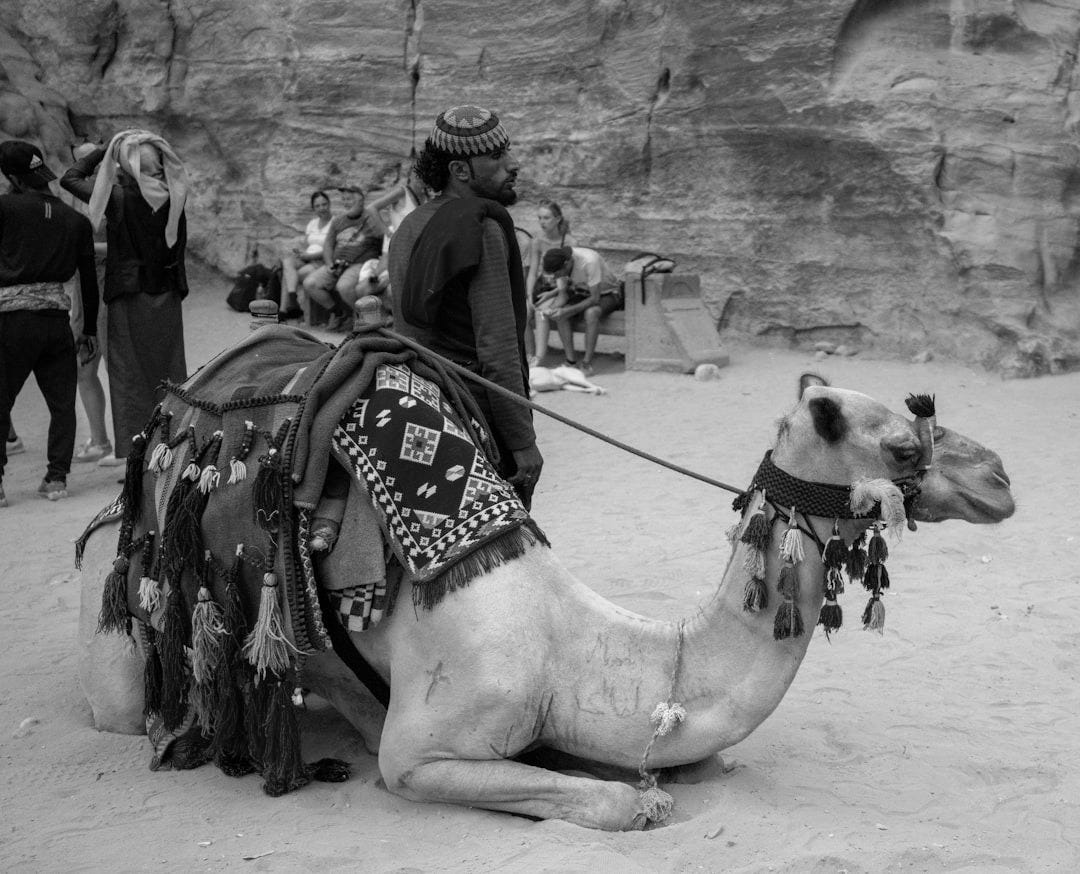
“Teacher, what good thing must I do to get eternal life?” Jesus pointed him to the commandments, and the man replied with the confidence of one who had kept the rules since boyhood. “What do I still lack?” he asked. Jesus answered with the words that exposed the secret weight on his soul: “Go, sell your possessions and give to the poor. Then come, follow me.” Scripture says the young man went away sad because he had great wealth. Jesus then offered the unforgettable image: “It is easier for a camel to go through the eye of a needle than for someone who is rich to enter the kingdom of God.” (Matthew 19:16-24)
To modern ears the metaphor sounds exaggerated, almost cryptic. Yet in ancient Israel, the “Eye of the Needle” was a real physical image. At the gates of old Jaffa stood a massive iron door that closed at sunset and stayed shut until dawn. A late traveler arriving with a camel would meet a locked city and a difficult choice. Inside the great gate was a smaller opening that allowed passage only if the traveler stepped down from the camel, removed every load, and forced the animal to its knees. Only a stripped and lowered camel could squeeze through. That small opening was called the Eye of the Needle.
The image remains powerful because it reveals something about God and something about us. Pride, not wealth, is the heaviest baggage we carry. Pride makes us rigid when God calls, it ties our identity to whatever sits on our backs. Achievements, intellect, independence, and the desire to control our own story create a load that feels natural to us yet weighs down our soul. The rich man is simply a mirror. Even those who own little still carry burdens of self-assurance and quiet ambition that keep them from bowing low. This ancient picture helps us see that God’s gate is always open but the door is always low. The path is wide enough for anyone but not tall enough for pride. To enter, we must decrease. To follow Jesus, something must come off our backs.
The First Sin and the Prideful Cherub
Before pride infected humanity it first rose within heaven itself. Ezekiel describes Lucifer as the seal of perfection, full of wisdom, radiant in beauty, and anointed as a guardian cherub. Yet Scripture says wickedness was found in him. His heart became proud because of his splendor. Isaiah reveals the secret whisper that corrupted him: “I will ascend. I will raise my throne. I will make myself like the Most High.” Pride did not merely stain Lucifer, it transformed the light bearer into the adversary.
The same temptation confronted humanity in Genesis 3. The serpent offered the same bait: “You will be like God.” Pride dethroned Lucifer first and then proceeded to deceive Eve. Pride introduced a spiritual gravity that pulls every person upward in self-exaltation and downward in spiritual powerlessness.
Yet when humanity fell, God responded not with revenge but with humility. He formed man from the dust and breathed into him the breath of life. Low and high were joined in one being. Derek Prince once taught that humans feel an inner conflict because we carry both the lowest part of creation and the highest touch of God. We were designed for fellowship and dependence. Pride interrupted that design.
Still, God answered pride with even deeper humility. He entered creation in the person of Jesus, Philippians says Christ “made himself nothing” and took on the nature of a servant. He accepted a path of surrender, obedience, vulnerability, and suffering. He descended before He ascended and because He humbled Himself, God exalted Him to the highest place.
The spiritual pattern is clear. The way up is down, the path to increase is decrease.
Living the Humility of Christ
Matthew 23:12 reveals a universal spiritual law. “Whoever exalts himself will be humbled and whoever humbles himself will be exalted.” The verse places the responsibility on us. Humility is not a feeling, it is a choice. Peter writes, “Humble yourselves under God’s mighty hand.” James says, “Humble yourselves before the Lord.” God does not crush us into humility, He invites us into it.
Jesus explains how to begin. In Matthew 18, when the disciples asked who was greatest in the kingdom, Jesus placed a child among them and said, “Unless you change and become like little children, you will never enter.” Children do not arrive with titles or credentials. They come low, they come trusting and they come empty handed. Paul deepens this truth in 1 Corinthians 1:26-29. God chooses what is low and weak so that no person may boast before Him. Pride is not disqualifying because God hates the proud person. It is disqualifying because pride blocks grace. Pride makes dependence look unnecessary and surrender look impractical. Pride keeps us upright at a gate where only the kneeling may pass.
Several other examples are chronicled in the Bible. In 2 Kings 5: Naaman lived this conflict. He was powerful, decorated, respected, and deeply afflicted with leprosy. When the prophet Elisha instructed him to wash in the Jordan, he was offended. The instruction felt too simple and too beneath him and his servants had to plead with him to obey. Only when Naaman laid aside his dignity and descended into the waters did healing reach him. Humility opened the door to transformation.
In Matthew 20:25-28, Jesus explains that greatness in the kingdom looks nothing like greatness in the world. Honor is found in lowering oneself and leadership is measured by service. Promotion is not seized, it is given by God to those who choose humility. Paul learned this rhythm too. In 2 Corinthians 12, he speaks about a thorn that kept him dependent on God. He discovered the mystery of grace as strength becoming perfect in weakness. When he decreased, Christ increased. John the Baptist offers the clearest summary when he proclaimed “He must increase but I must decrease.” This is not poetic language, it is the essential rhythm of Christian life. Christ rises within us to the degree we bow before Him.
Entering Through the Needle’s Eye
This is the calling of every believer. We kneel at the gate, we set down the pride, the self-sufficiency, the fear of appearing small, the hunger for approval, and the need to control outcomes. When we shed these burdens, we find the narrow door wide enough to welcome us. Hebrews 12:2 invites us to fix our eyes on Jesus. Humility does not flow from looking inward, it flows from looking at Him. We become low when we see how high He is and we become light when we release what we cannot carry. We enter freely when we stop insisting on entering fully loaded.
To decrease is not loss, It is to pass through. Humility is not humiliation, it is entry in His kingdom. The camel kneels not to suffer shame but to gain admission. In the kingdom of God, down is the only way forward. Low is the only way in. Empty is the only way filled. Decrease is the only path to increase.
In the end, it comes down to a simple question and a sincere challenge. Is there a step God is asking you to take in response to pride within your heart. Is there a place in your life that has not yet bowed before Him. Is there an area where you still rely on your own strength rather than His. The Eye of the Needle invites you to lay it down. The path narrows, but grace waits on the other side. Full dependence is not loss, it is the doorway to life.
Prayer to Decrease That Christ May Increase
Lord,
Bend my heart low beneath Your hand. Remove every burden that keeps me from kneeling before You.
Strip away self-reliance, pride, comparison, and the illusion that I can stand without Your strength.
Teach me the joy of childlike trust and the freedom of full surrender and form the humility of Jesus in me.
Let every part of my life decrease so that the life of Christ within me may increase.
Bring me through the narrow gate unburdened and willing. Lift me up in Your time and for Your glory.
In Jesus’ name,
Amen.