


Hello there! Welcome to Fiery Word
If you haven’t already done so, please subscribe to this newsletter. It is free and goes directly to your inbox when you subscribe.
Kindly take a second to subscribe and share with somebody today.
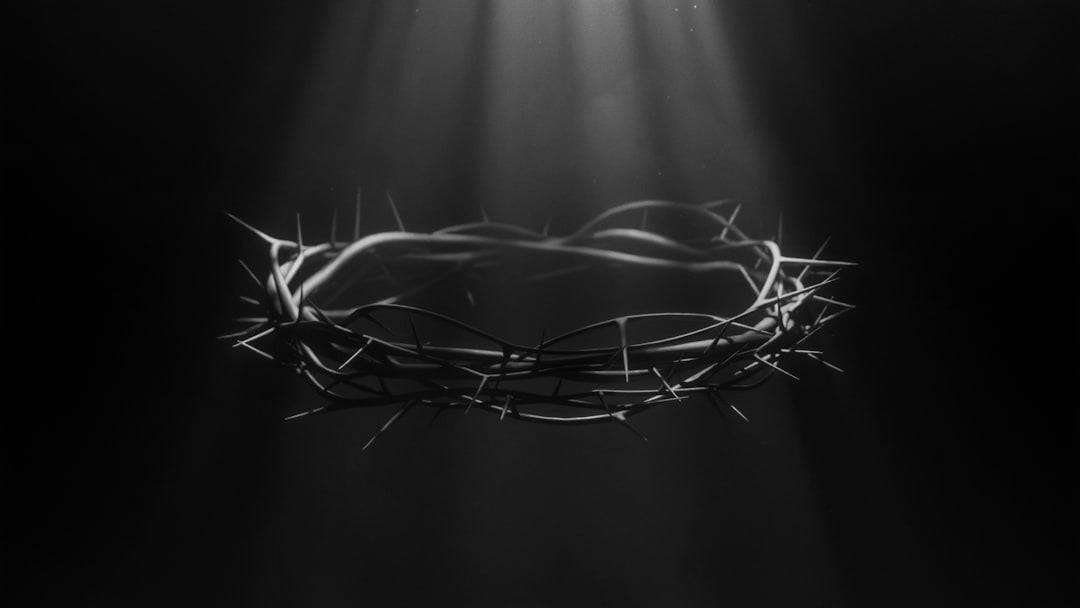
“And the Word became flesh and dwelt among us, and we have seen his glory, glory as of the only Son from the Father, full of grace and truth.” — John 1:14
The Logos Wore a Name
Before there was a manger, there was a word and before the word, there was the Word. John does not begin his Gospel where Matthew begins, with a genealogy, or where Luke begins, with an annunciation. He begins before creation, in the silence that preceded light, and he names what was already there. In the beginning was the Logos, and the Logos was with God, and the Logos was God.
The Greek philosophical tradition had a use for logos. The Stoics made it the impersonal rational principle running through the cosmos, the organizing logic behind what exists. It was a force, a structure, an idea too large to be personal. When John picks up the word, he is not borrowing their framework, he is detonating it. The logos of the philosophers became flesh and the principle became a Person. The organizing logic of the universe walked into a village, got hungry, wept at a tomb, and called fishermen by name.
John’s verb for the Incarnation carries more weight than most translations surface. He says the Word eskenosen among us, from the verb skenoo, to pitch a tent. The resonance is not accidental. Israel had known God’s presence in a tent before, the Tabernacle in the wilderness, the portable dwelling where the glory of the Lord settled between the cherubim and the people came near with their offerings and their need. Now the Tabernacle had come to them in a different form. God was not dwelling in an architecture of gold and acacia wood; he was dwelling in flesh. The tent He pitched was His own body, and He had been weaving it in the dark of a Galilean girl’s womb.
This is the claim John makes before he says another word about Jesus. Not that a great teacher appeared. Not that a prophet rose in the tradition of the prophets. The claim is that the One who was in the beginning, through whom all things were made, in whom was life, and whose life was the light of men, that One became one of us. The Incarnation is not God condescending to visit. It is God inserting Himself into the creation He authored, at the level of the creature, by choice, under love’s full weight.
The Covenant That Demanded a Body
The Incarnation was not an improvisation. God did not arrive in Bethlehem as a response to a situation that had gotten out of hand. He arrived as the fulfillment of a logic that had been running since He spoke the first covenant word to Abraham by the fires of Mamre. He had cut that covenant, and He alone had walked between the pieces when Abraham could not. He had given the law through angels, appointed the priesthood, instituted the sacrificial calendar, and all of it, every lamb, every altar, every high priest pressing through the veil on the Day of Atonement, had been pointing toward a moment that the system itself could not produce. The law could diagnose but not cure. The sacrifices could cover but they could not cleanse. Something else was required.
What was required was what Paul names in Galatians with the precision of someone who has thought about nothing else: when the fullness of time came, God sent forth his Son, born of a woman, born under the law, that we might receive the adoption of sons. Born under the law. Not above it, observing from a safe distance, but under it, subject to its claims, bound by its obligations, and therefore qualified to meet them on behalf of those who could not. A substitute had to be someone the law could reach. The Incarnation made that possible. Deity assumed the liability of the fall by entering the fallen order without entering its corruption.
This is what Israel was holding in its hands and could not see. Their Jehovah, the God of Abraham, Isaac, and Jacob, the One who had parted the Reed Sea and fed them in the wilderness and spoken from Sinai until the mountain smoked, that God was walking among them in the form of a carpenter from Nazareth. The High Priesthood was hosting its Author. The men who dressed the Passover lambs were in the same city as the Lamb of God. They had built the entire sacrificial system around a reality they were now refusing to recognize. They worshipped the law more than they worshipped the Lawgiver. They honored Moses more than the One Moses had been writing about all along.
He did not expose them. He came incognito, and He stayed that way. That restraint was not weakness. It was covenant faithfulness operating under love’s own terms.
Ekenosen: He Poured Himself Out
Philippians 2 is where the architecture of the Incarnation is most visible, and it is built around a verb that has been both over-explained and under-felt. Paul says that Christ, existing in the form of God, did not count equality with God a thing to be grasped, but ekenosen, emptied himself. The translators reach for emptied and they are not wrong, but the word carries something they often leave on the table. Kenoo means to pour out, to make void, to strip of content. The verb form here, ekenosen, is active and decisive. He did it. It was not done to Him. He poured Himself out.
Consider what that restraint reveals. Matthew had the full post-resurrection understanding of who Jesus was when he sat down to write. He knew. Mark had traveled with Paul and absorbed the Pauline revelation of Christ as the image of the invisible God, the firstborn of all creation, in whom all the fullness of God was pleased to dwell. John carried perhaps the deepest knowledge in the New Testament and released it in his prologue with the controlled precision of someone who understood exactly what he was doing. All three men wrote their Gospels with the knowledge of Pentecost behind them, the Spirit’s own testimony to the identity of Jesus pressing on their minds. And not one of them stepped into the narrative to say it plainly. They told the story from inside the hiddenness. The Spirit who inspired them honored the shape of the event He was describing.
That is not a small observation. It means the concealment was not incidental to the Incarnation; it was intrinsic to it. God came in a form that could be overlooked, questioned, doubted, and refused, and He stayed in that form for thirty-three years, because the alternative would have destroyed the very thing He came to establish. If the Logos had arrived in the uncurtained fullness of divine glory, no one would have had the option of unbelief. The fishermen by the lake would not have chosen to follow. They would simply have fallen down. What looks like weakness in the Incarnation, the obscurity of Nazareth, the family that doubted Him, the crowds that walked away, is actually the most precise expression of what love requires. Love that cannot be refused is not love. It is compulsion. God did not come to overwhelm the will He had made. He came to be freely received by it, which meant He had to come in a form that made refusal genuinely possible.
He poured Himself out so that what remained was exactly what we needed to meet: not an irresistible force, but a Person. Not a display of power that left no room for response, but a life so fully and quietly given that recognizing it required the very thing He had come to restore, the opened eye, the softened heart, the willingness to receive what could not be earned.
Love does not announce itself in order to compel. It enters in order to be freely received or freely rejected. The Logos who held all things chose the form in which He could be refused, because the alternative, arriving in the fullness of divine glory, would have left no room for faith, for love freely given, for the kind of trust that is the only currency the relationship between Creator and creature was ever designed to run on. He poured Himself out so that what was left was exactly what we needed to meet.
A Stranger in His Own House
Isaiah had seen it coming. He was despised and rejected by men, a man of sorrows and acquainted with grief. The word the prophet uses for rejected is chadal, to cease, to forsake, to be left alone. He was forsaken by the very people whose existence He had authored, whose history He had shaped, whose covenant He had kept through centuries of their unfaithfulness. He came to what was His own, and His own did not receive Him. John says it without elaboration, as though the enormity of it does not require amplification.
He had nowhere to lay His head. Homes were closed against Him. His own brothers did not believe Him. The religious leaders who should have been the most prepared to receive their Messiah were instead the most organized in their opposition. And He walked through all of it, not with the detachment of someone managing a difficult situation from an elevated vantage point, but with the full exposure of someone who was actually there, actually hungry, actually tired, actually moved to weeping at the grief of people He loved and was about to raise from the dead. He was not above the conditions of the world He had entered. He was in them, all the way down.
Matthew 23 gives us the sound of what that cost Him. O Jerusalem, Jerusalem, the city that kills the prophets and stones those who are sent to it. How often would I have gathered your children together as a hen gathers her brood under her wings, and you were not willing. There is a sob in that sentence that no amount of theological parsing can drain out. The One speaking is the One who had been gathering Israel since the Exodus, and He was standing in front of the city where He would be crucified within the week, and He was weeping. Deity in grief with love refused. Yet, He was still offering it.
His steps toward the cross were not a sudden turn. They were the completion of a trajectory that had been running from Bethlehem. Every healing, every dispute with the Pharisees, every meal with sinners, every moment in which He chose to stay within the conditions of creaturely weakness when He could have stepped out of them, all of it was the Incarnation pressing forward toward the moment for which it had been designed. He had not come to be comfortable in the world. He had come to redeem it, and redemption required that He go all the way in.
What This Makes You
The Incarnation is not a doctrine to be filed under theology and left there. It is the first movement of a rescue operation so deliberate and so costly that it redefines what it means to be found by God. The Logos, who was in the beginning, through whom all things were made, in whom was life, chose the form of a servant and walked thirty-three years inside a creation that did not recognize Him, all the way to a cross He did not deserve, for people who were not yet looking for Him.
You are the object of that plan. Not a passing concern, not an afterthought in the economy of grace, but the reason the Word put on flesh. Before the garden of Gethsemane knew His name, before the cross had been cut from its timber, before the tomb had been sealed and opened, the Logos had already decided that the cost of reaching you was worth paying. John says it as plainly as language will allow: the Word became flesh and dwelt among us. He moved into the neighborhood. He came all the way down so that there would be no distance left between where He was and where you are.
The believer who grasps this does not walk through the world as someone trying to make themselves worthy of a God who is watching from a safe distance, tallying the shortfall. They walk as someone already found, already named, already claimed, by a God who was willing to be unknown and homeless and rejected and crucified in order to make that claiming possible. You are not working toward a relationship. You are living inside one that cost the Son of God everything He poured out.
The series that unfolds from here, through the cross and the three days and the blood carried into the heavenly sanctuary and the fire of Pentecost, is the rest of that story. But it begins here, in the Bethlehem dark, with the Word becoming breath and bone, pitching His tent among the very people who would not recognize Him, and choosing, with full knowledge of what was coming, to stay.
We pray:
Father, we have read this story so many times that its edges have grown smooth in our hands. Restore to us the strangeness of it. The Word became flesh. The One through whom all things were made was born in a place where animals were fed, and almost nobody knew. Let that land on us the way it should: not as doctrine to be defended, but as love to be received.
We confess that we have often lived as though the distance between us and You is still the distance it was before Bethlehem. We have approached You as though the tent had not been pitched, as though the Logos had not moved into the neighborhood of our need. Forgive us for the smallness of that faith.
Make us people who carry the weight of the Incarnation into the days ahead. Not as those who merely know the theology of it, but as those who have been undone by the love of it: that You would choose to be unrecognized, to be refused, to be homeless in Your own creation, for us. Let the knowing of that shape how we love the people in front of us, especially the ones who do not yet recognize You.
We receive what You came to give. We receive it with open hands and grateful silence. In the name of the One who was in the beginning, and who became flesh, and who dwells among us still.
Amen.