


Hello there! Welcome to Fiery Word
If you haven’t already done so, please subscribe to this newsletter. It is free and goes directly to your inbox when you subscribe.
Kindly take a second to subscribe and share with somebody today.

Dear Readers,
As 2025 draws to a close, I want to end with gratitude. Thank you for reading, reflecting, sharing, and praying alongside Fiery Word this year. What began as quiet words on a page has continued to become a shared space of Scripture, honesty, and renewal because of your presence and faithfulness.
In keeping with the rhythms I write about, Fiery Word will be entering a brief Sabbath through the remainder of the year. This pause is intentional, a moment to rest, listen, and make room for what God is forming beneath the surface. Fiery Word will return, refreshed and expectant, on January 1, 2026.
Until then, may this season be one of stillness, reflection, and trust in God.
Thank you for walking this journey with me and see you in 2026.
Now to the word for the week!
“Remember the instruction you gave your servant Moses, saying, ‘If you are unfaithful, I will scatter you among the nations, but if you return to me and obey my commands, then even if your exiled people are at the farthest horizon, I will gather them from there and bring them to the place I have chosen as a dwelling for my Name.’” (Nehemiah 1:8–9)
Throughout Scripture, the story of Israel is marked by a recurring ache. Again and again, the people of God drift toward idols. From the wilderness under Moses, through the days of Joshua, the priests, and the judges, the pattern repeats with weary consistency. Israel forgets, Israel substitutes, Israel turns to gods that can be fashioned, controlled, and carried. Idolatry becomes not an isolated failure but a learned reflex, a habit woven deeply into the life of a chosen people. That pattern breaks only after exile.
The Babylonian captivity represents something unprecedented in Israel’s story. For the first time, God’s people are stripped of every familiar source of strength. The temple is gone, the land is lost and the monarchy has collapsed. Even their suffering carries a sobering clarity. This exile is not an accident of history but a consequence permitted by God Himself. And yet, paradoxically, it is there, in the place of judgment, that Israel finally becomes attentive. With nothing left to turn to, they turn to God. Powerlessness becomes the soil in which repentance takes root. When the exile ends, Israel does not return as a self-assured nation. They return humbled, aware that survival itself is mercy. Fellowship with God is restored not through confidence, but through dependence.
The book of Nehemiah is often read as a manual on leadership, vision, and perseverance. Those lessons are real and valuable. But beneath them lies a deeper truth. Nehemiah is a testimony to the faithfulness of God. It is the visible fulfillment of promises spoken centuries earlier, promises that held both warning and hope.
In Deuteronomy, Moses lays before Israel a covenant with two paths. Blessing and life for obedience. Cursing and death for rebellion. The words are unambiguous. To love the Lord, to walk in His ways, is to flourish. To turn away, to bow to other gods, is to unravel. Israel’s exile is not a mystery when viewed through this lens. It is the outworking of a covenant clearly declared. Yet embedded within that same covenant is grace. Moses speaks not only of dispersion, but of return. Even when scattered to the farthest corners of the earth, God promises to gather His people again when they turn back to Him with their whole hearts. Judgment is not God’s final word. Restoration is.
The Israelites living in Babylon were inhabiting the covenant curses. But the time appointed for mercy arrived. In Nehemiah, we see a people who had effectively chosen death now choosing life. The choice could only be made after illusion had been stripped away. Only after hope in self had collapsed could hope in God be restored. Jesus echoes this divine pattern when He speaks of a seed that must fall to the ground and die in order to bear fruit. Life does not emerge from self-preservation, but from surrender. Israel’s story, then, is not merely historical, it is deeply personal. It reveals how God often works in us. Renewal does not begin with strength. It begins with the confession that we have none.
This truth confronts our generation with uncomfortable clarity. We too have built idols, often more subtle and socially acceptable than those of ancient Israel. We have made gods of ambition, pleasure, autonomy, and self-definition. These pursuits promise meaning, yet they quietly exhaust us. They offer stimulation without substance, identity without grounding, and power without peace.
Perhaps this is why a renewed hunger for faith is stirring in our generation. Not because belief has suddenly become fashionable, but because many are discovering the limits of self-sufficiency. When control fails, when distraction no longer numbs, when pleasure cannot answer the deeper questions of the soul, the illusion breaks. Viktor Frankl observed that when people cannot find meaning, they distract themselves with pleasure. Scripture offers a more hopeful diagnosis. Meaning is not manufactured, it is received, it is found in Christ.
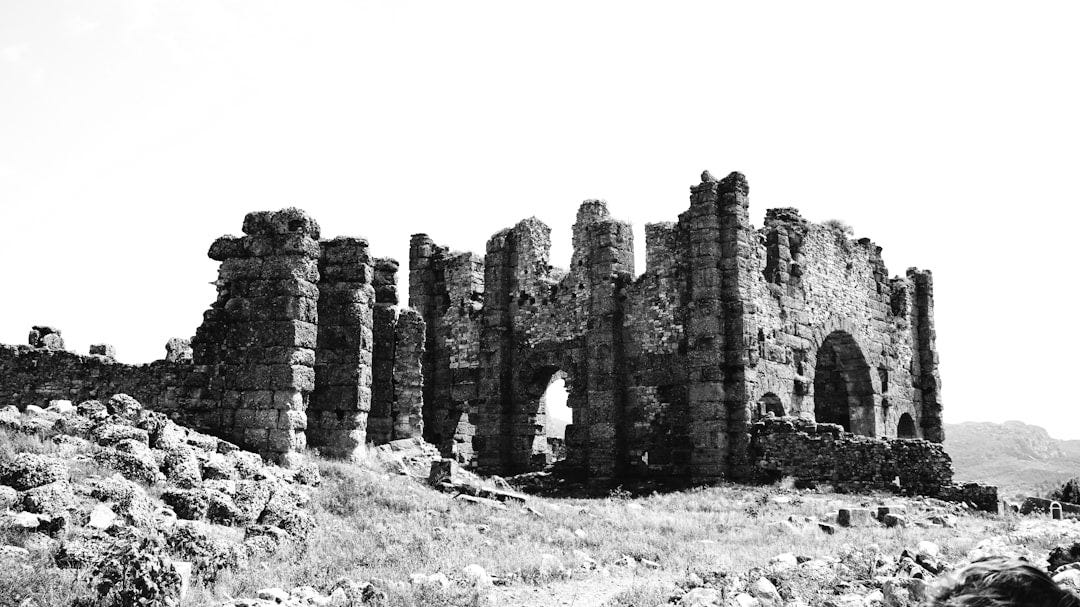
Even so, returning from exile is only the beginning. In Nehemiah, the people do not merely rejoice in coming home, they confront ruins. Walls lie broken and gates are burned. Restoration requires rebuilding. And yet, this rebuilding begins with prayer, fasting, and confession. The work advances not because the people are powerful, but because they know they are not. Their dependence becomes their strength.
This pattern reaches its fullness in Jesus. The salvation of the world does not arrive through force, conquest, or spectacle. It comes through vulnerability. Christ does not take up a sword, He stretches out His hands to receive the nails. He does not escape judgment but bears it. In apparent weakness, death is defeated. Redemption flows not from domination, but from surrender.
To follow Christ, then, is to embrace this same posture. Grace is not earned. It is received by those who know they have nothing to offer. Salvation is not a partnership between divine effort and human competence. It is a gift given to the powerless.
As the Church looks toward renewal, both personal and communal, we would do well to remember this truth. God’s promise to Paul remains a steady anchor. His grace is sufficient and His power is made perfect in weakness. We do not boast in our strength, we boast in our need. And in that place, Christ’s power rests on us, steady and sufficient, rebuilding what once lay in ruins.
Prayer for Rebuilding the Ruins
Faithful God,
We come to You not with strength to offer but with empty hands. We confess that we have trusted in our own wisdom, our own ambition, and our own ability to hold life together, and in doing so we have wandered into quiet forms of exile.
Strip us of every false refuge that competes with You, not in judgment alone but in mercy, so that we might learn again to listen. Teach us to recognize powerlessness not as failure, but as invitation.
Where our walls lie in ruins, give us hearts that return before hands that rebuild. Where pride has hardened us, soften us with repentance. Where we have chased meaning in lesser things, turn our eyes back to You, the only source of life.
May we die to ourselves so that Your life may rise within us, and may Your grace be sufficient for us when nothing else is.
Let Your power rest on us, not because we are strong, but because we are Yours.
In Jesus’ name
Amen