


Hello there! Welcome to Fiery Word
If you haven’t already done so, please subscribe to this newsletter. It is free and goes directly to your inbox when you subscribe.
Kindly take a second to subscribe and share with somebody today.
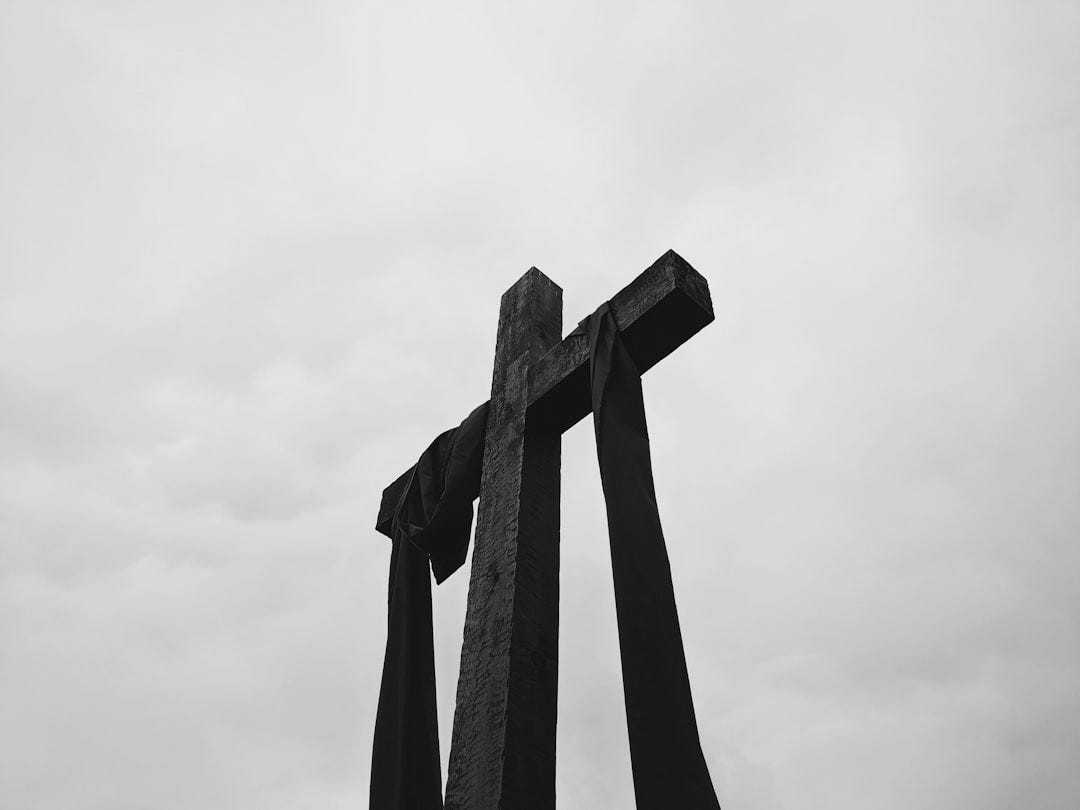
“When Jesus therefore had received the vinegar, he said, It is finished: and he bowed his head, and gave up his spirit.” — John 19:30
Not My Will
The cross did not happen to Jesus. That sentence needs to settle before anything else can be said about the gospel of ressurection. Every image we carry of a man led against his will toward an execution he could not escape, every instinct to read the passion narrative as something done to a victim, misses the weight of what the Gospel has been building toward from its first chapter. The Logos who was in the beginning, through whom all things were made, was not ambushed in a garden. He went there deliberately. He knelt in the dark with full knowledge of what the next twelve hours would require, and He chose.
The prayer He prays in that garden is the hinge on which the entire redemption turns. Father, if you are willing, remove this cup from me. Nevertheless, not my will, but yours, be done. The request is real. The suffering He is anticipating is not theatrical. Something is coming that His whole being recoils from, and it is not the nails or the physical extremity of crucifixion. It is something He has never faced in all of eternity: the experience of becoming what He is not. Of absorbing into His person the full accumulated weight of human alienation from God. He had been in unbroken communion with the Father from before the foundation of the world. What was coming would break that communion, and He knew it, and He went anyway.
This is why the angel strengthening Him in the garden is one of the most quietly devastating details in the Gospel. God, in the form of a man, needing to be sustained to face what lay ahead. Not because He lacked the power to walk away. Twelve legions of angels waited on His word, He said so Himself in Matthew. But He had already counted the cost and confirmed the consent, and so the angel came, not to offer an escape, but to hold the body steady for what love had already decided.
Every nail was preceded by that decision. Every moment of the cross was held inside the will He surrendered before dawn. Gethsemane is where Good Friday actually began.
Him Who Knew No Sin
There is a sentence in Paul’s second letter to the Corinthians that the Church has read so many times its edges have gone smooth. God made him who knew no sin to be sin for us, so that in him we might become the righteousness of God. We move through it toward the comfort at the end and miss the violence at the center. What Paul writes is not that God treated Jesus as sinful, or assigned Him a legal category from a safe distance. The word he uses, hamartia, names sin not as a list of individual offenses but as a condition, a power, the whole inheritance of human alienation from God running back to Eden. God made Jesus that. Not guilty of it. Not proximate to it. He made Christ it.
But before the sentence arrives there, it pauses on a phrase that changes the weight of everything that follows: him who knew no sin. This is the detail that opens the abyss. Jesus had walked thirty-three years through a world saturated with sin and it had not formed Him. He had healed people broken by it, eaten with people defined by it, wept over a city destroyed by it, and none of it had touched His own person. He was, in the fullest sense the words allow, the one man sin had never met. No accumulated guilt. No distorted instincts absorbed from birth. No internal knowledge of what it is to be estranged from the Father.
Which means the cross was not a deepening of something already familiar. It was a collision with something utterly foreign. He did not absorb sin gradually, the way we are shaped by it from infancy. He received it from the outside in, fully, all at once, in a single afternoon, having never carried so much as its shadow before. We have no reference point for what that cost. We have never known what it is not to be touched by sin. He had never known what it was.
The cry from the cross is the sound of that collision. Eloi, Eloi, lema sabachthani. My God, my God, why have you forsaken me. The communion that had been unbroken from eternity went silent. Not because the Father stopped loving the Son, but because the Son had become the thing the Father’s holiness cannot hold, and in that silence Jesus stood in the precise location where every human being who has ever lived deserved to stand: inside the judgment of God, alone.
He stood there so that we would not have to.
Present & Ongoing
When He says it is finished, He is not expressing relief. He is issuing a verdict.
The word is tetelestai, and it was not a word invented for this moment. Anyone transacting commerce in the ancient world knew it. It was the word stamped on a paid invoice, written across a settled account, spoken when an obligation had been fully and finally discharged. Nothing further is owed. The transaction is complete. When Jesus speaks it from the cross, He is not summarizing His own suffering. He is declaring, with the authority of the One who designed the whole architecture of redemption, that the debt of humanity has been met. The account has been closed. The liability will not be revisited.
The tense he speaks it in matters. Tetelestai is perfect, an action completed in the past whose results extend without interruption into the present. It is finished, and it stays finished. Not provisionally or pending review. The work is done and it holds.
Then He bowed His head and gave up His spirit. John’s verb is deliberate: not had it taken, but gave it. The One who had consented before dawn completed the consent at midday, with a declaration that sealed everything and a final act of will that released what no one could have taken from Him by force.
Three days later, the Father answered.
The resurrection is not a reversal of the cross; it is the Father’s countersignature. The payment was accepted. The sacrifice was sufficient. The silence of death that Jesus entered was not a judgment against Him, it was a cost He was bearing for others, and when the bearing was complete, the Father raised Him out of it. The empty tomb is not a happy ending appended to a tragedy. It is the vindication of everything tetelestai claimed. It is the confirmation, written in the grammar of a body that death could not hold, that the declaration from the cross was true and remains true.
Easter as a day and perhaps even a whole season is not about the story being turned around. It is about the story was proved. The cross without the resurrection is unanswered and the resurrection without the cross is unearned. Together they are the single event on which the weight of every human life before and after has been placed, and held.
Because tetelestai is perfect tense, its results are present and ongoing. The believer is not living in a world where the transaction is pending, where its sufficiency is in question, where the debt might be reinstated if the performance falters. They are living inside a completed work. The weight Jesus absorbed in the garden’s consent and the cross’s darkness has been absorbed, permanently, irreversibly, with the full authority of the One who declared it finished and then walked out of the tomb to prove it.
What happened in those hours between Gethsemane and the sealed stone was not a transaction operating at a distance from you. It had your name in it. The sin Jesus became was yours. The silence He entered was the silence you had earned. He went into what you deserved so that you could receive what He earned, and what He earned was ratified by an empty grave and a folded burial cloth left behind like a signature.
You are not a person working your way back toward the Father’s presence. You are a person for whom the way back has already been opened, at a cost that was counted in a garden before dawn, paid on a cross at midday, and confirmed in a borrowed tomb before the week was out. The silence of God that Jesus absorbed on the cross is the silence you will never have to hear, because He heard it for you. What remains for you is not the debt. What remains is the declaration.
Tetelestai. It is finished. And it remains finished, now, today, for you, without condition and without end.
We pray:
Father, we come to this day carrying things we were never meant to carry. Guilt that has already been absorbed. Debt that has already been paid. Silence that Jesus has already entered and exited on our behalf. Forgive us for living as though something more were still required, as though the work were not finished, as though Your holiness were still waiting to be satisfied.
Take us back to the garden first. Let us feel the weight of the choice He made in the dark while the disciples slept, the full-eyed, uncoerced consent of a Person who knew everything that was coming and went toward it anyway. Let that consent undo the distance we have kept from the cross.
Take us to the cross. Not past it, not around it. Let us stand long enough in front of what happened there to feel what it means that Him who knew no sin became sin, for us. Let the cry of dereliction reach us, because it is the sound of the silence we will never have to hear.
And let us receive what Easter means. The grave could not hold Him. Tetelestai stands. Raise us into the freedom of people who are not straining toward a verdict still to be delivered, but resting inside one already given. It is finished. Let that be enough. Let it be everything.
In the name of the One who said it, and rose to prove it.
Amen.