


Hello there! Welcome to Fiery Word
If you haven’t already done so, please subscribe to this newsletter. It is free and goes directly to your inbox when you subscribe.
Kindly take a second to subscribe and share with somebody today.
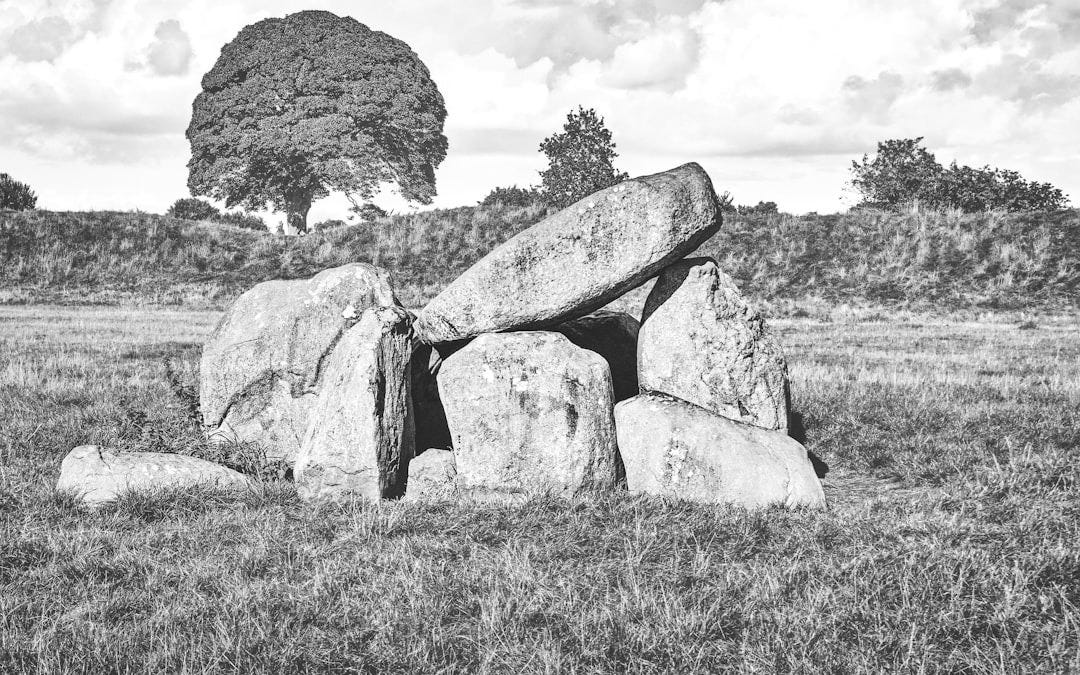
“Come near to me. And he repaired the altar of the Lord that was broken down. And Elijah took twelve stones, according to the number of the tribes of the sons of Jacob, to whom the word of the Lord had come, saying, ‘Israel shall be your name.’ Then with the stones he built an altar in the name of the Lord…” — 1 Kings 18:30–33
It had not rained in three years.
Three years of cracked ground and empty wells, three years of a nation slowly starving, not only for bread but for the word of the Lord. Ahab, the most wicked king Israel had ever known, had constructed an altar to Baal in Samaria, taken Jezebel as his queen, and presided over the systematic murder of the Lord’s prophets until the survivors were hiding in caves by the hundreds. This was not spiritual drift. This was institutional apostasy, state-sponsored and Jezebel-funded, with 450 prophets of Baal eating at the royal table.
And yet the people on Carmel that day are not quite the same as Ahab. They are something more familiar, and in some ways more convicting. Elijah does not rebuke them for open idolatry. He rebukes them for halting between two opinions. “How long,” he demands, “will you go limping between two different opinions?” (1 Kings 18:21). They had not fully converted to Baal, but neither had they remained faithful to the Lord. They were the complicit middle, dragged along by the current of a culture that had normalized the worship of foreign gods, their devotion to Yahweh thinned by years of accommodation and passive compromise. The altar of Baal was well-maintained and state-funded. The altar of the Lord was in ruins.
This is where we find Elijah. He steps onto Mount Carmel, into a contest no one should survive, and before he prays a single prayer or confronts a single false prophet, he stops. He looks at the altar of the Lord. And it is in ruins.
That ruined altar should arrest us, because of how it got that way. It was not torn down by enemies. No foreign army dismantled it stone by stone. While the altars of Baal were built up and staffed and celebrated with royal patronage, the altar of the Lord had simply fallen apart through disuse. Neglect is its own kind of demolition. It does not announce itself or arrive with violence. It accumulates quietly, absence by absence, until one day you look at what was meant to be the place of encounter with God and find only rubble where fire once burned. The apostasy at the top was dramatic. The condition of the altar was the slow evidence of what that apostasy had produced in the people below. This is the first diagnosis of the text, and it is aimed directly at us.
Because every one of us has an altar. Not a structure of stone or wood, but a spiritual place of power and connection, the covenantal orientation of the whole self toward the One who made us. And if we are willing to be honest, we will confess what Elijah found on Carmel: the altar is broken down. Our prayer lives have grown thin and intermittent. Worship has drifted from encounter toward performance. We have permitted God to migrate from the center of our existence to the margins, consulted in crisis and ignored in comfort, while competing loves quietly crowd the sanctuary within. The Westminster Shorter Catechism asks what the chief end of man is, and answers without hesitation: to glorify God and enjoy Him forever. A broken altar is not merely a devotional failure. It is a failure of telos, a life organized around the wrong things, a life whose center has been quietly vacated. The drought is not meteorological. It is spiritual. And it has been building, silently, for longer than most of us want to admit.
But look carefully at what Elijah does next, because the text is more instructive than we often give it credit for. He does not immediately call fire from heaven. He does not launch into intercession. He turns to the people first and says simply, “Come near to me.” And all the people come near. This is the opening movement of every genuine revival, not a movement toward activity or spectacle, but a movement toward presence. Distance had allowed their devotion to weaken over years of drift, but proximity would force a decision. When the people gathered around the ruins of that altar, they could no longer keep the brokenness abstract. They could see the scattered stones. They could feel the silence where fire once burned. Revival always begins with return, and return always begins with drawing near, to God, to one another, to the honest condition of the place where we are supposed to meet Him.
Then he takes twelve stones, one for each tribe of Jacob, and here the theology runs deeper than mere symbolism. The twelve stones carry the weight of the whole covenant people. No tribe is missing. No part of Israel is exempted from what is being rebuilt. This act reaches deeper than structural repair. It is a re-centering of identity. Before the nation could experience divine fire, they had to remember who they were and whose they were, that God was not at the center of some of them but at the center of all of them, collectively and without remainder. When Christ later appointed twelve disciples, the number was not incidental. Mark tells us He appointed twelve “so that they would be with Him” (Mark 3:14). The altar moved from Sinai to the human heart, but the covenantal logic remained identical: God at the center, or nothing works. Whether twelve stones or twelve disciples, the Scripture is making the same declaration across the testaments. This is not optional architecture. This is the structure of a life that can bear the fire of God.
What follows in the text is the detail that undoes me every time I read it. Elijah does not merely repair the altar and pray. He commands that four large jars of water be poured over the sacrifice. Then again. Then a third time. Until the water runs down and fills the trench around the altar. He is soaking it, deliberately, in the one resource three years of drought has made most scarce. He is making it humanly impossible for fire to fall, and that is precisely the point. Heaven responds not to performance but to consecration. Elijah is not staging a fair contest; he is stripping away every natural explanation in advance, so that when fire falls, no one can attribute it to cleverness or circumstance. This is the posture that precedes genuine revival: not confidence in methods, not spiritual technique, but a kind of reckless, water-soaked surrender that says, Lord, if this happens, it will be You and only You. We do not manufacture the fire. We cannot. We prepare the conditions, we remove our fingerprints from the outcome, and we pray.
And when Elijah finally prays, there is not a word wasted. He does not pray vaguely or ask God to show up in some generalized way. He prays by name and by covenant: “LORD God of Abraham, Isaac, and Israel.” He reaches backward into history and holds God to His own record of faithfulness, planting his intercession in the soil of what God has already done and already promised, asking with the specificity of a man who knows he is not appealing to an indifferent sky but to a covenantally committed Father. This is how broken altars are rebuilt in prayer, not by emotional intensity alone, but by rooting our asking in the character and covenant of the God to whom we are speaking. We pray the promises back. We invoke the name. We remind ourselves, and declare before heaven, that the God who answered then is the same God who hears now.
Then the fire fell.
Not before. After. After the twelve stones, after the trench was full, after the prayer went up, then the fire of the Lord came down and consumed the burnt offering and the wood and the stones and the dust, and licked up the water in the trench. Read that slowly. The fire consumed the stones. The altar itself was taken into the fire. Nothing was spared, nothing was left over, nothing remained unconsumed, because that is what God does when the altar is truly prepared and the surrender is truly complete. He does not respond with modest warmth or measured blessing. He responds with consuming fire, and the consuming is total. The people fell on their faces, not because someone told them to, not because the atmosphere was charged and emotional, but because they had witnessed something that left no room for ambiguity. “The LORD, He is God!” they cried. “The LORD, He is God!” The fruit of a repaired altar is never merely private renewal. It is public declaration. Communities that have been drifting in confusion suddenly know again who is on the throne. What began in one man’s obedience became the turning point of a nation’s witness. The fire that falls on a yielded life rarely stays contained to that life alone.
Now, an altar requires a sacrifice, and this has been true from Abel’s first offering to the cross at Calvary. Paul writes to the church at Rome in unmistakably altar language: “I appeal to you therefore, brothers, by the mercies of God, to present your bodies as a living sacrifice, holy and acceptable to God, which is your spiritual worship” (Romans 12:1). The altar is still standing. What it requires is you. Your time, given before it is depleted by lesser things. Your attention, brought to stillness before the One who deserves its first and best. The throne of the self, willingly surrendered rather than stubbornly defended. But we must be clear about what we are bringing and why. We do not bring these things as atonement. Christ is the final and sufficient sacrifice, the Lamb slain before the foundation of the world (Revelation 13:8), and nothing we lay on the altar adds a single thing to what He has already accomplished. What we bring is availability. We offer the time where distraction once ruled, the attention where indifference had settled, the obedience where self-direction once prevailed. The altar becomes the place where lesser loves are relinquished, not because we must earn God’s favor, but because we have already received it, and that favor deserves more than the scraps of our leftover hours.
And understand the order, because the gospel depends on it. We do not rebuild to earn the fire. We rebuild in response to a grace that was given long before we ever turned toward God. The Lamb was slain from the foundation of the world. The sacrifice that makes all our sacrifices possible was accomplished before history began, before the drought, before the broken altar, before Elijah ever climbed that mountain. We bring our small, broken, water-soaked offerings to an altar already consecrated by the blood of Christ, and the fire that falls is not payment for our devotion. It is the overwhelming response of a God who was already inclined toward us, already present, already moving, waiting only for the altar to be made ready by willing and surrendered hearts.
There is also a corporate dimension to this call that we cannot bypass. Elijah did not repair the altar in isolation, sealed off in private piety while the people watched from a distance. He drew them near so that the work of restoration would become their shared responsibility and their shared testimony. In every generation, God awakens communities through individuals who choose to return first, through the few who decide that the condition of the altar is too important to ignore any longer. When even a remnant begins to rebuild the altar of prayer, humility, and surrender, the spiritual atmosphere of a community begins to shift. What once felt normal, the quiet distance from God, the indifference toward holiness, the comfortable compromise, begins to be confronted by the simple, living witness of people who have been with Him. Revival moves from the private chamber into the gathered life of God’s people, and it spreads not through noise but through consecrated lives that carry the fragrance of His presence.
Elijah did not wait for perfect conditions. The ground was cracked, the nation was compromised, the political situation was catastrophic, and the altar was in ruins. He rebuilt anyway, stone by stone, in the middle of a drought, with no guarantee that anything would happen except the faithfulness of the God he was praying to. The restoration did not happen in a single dramatic moment of conviction either. It unfolded as a sustained, deliberate act of obedience: gathering the stones, laying the sacrifice, filling the trench, praying the covenant. Stones once scattered had to be gathered. The altar became not a place visited in crisis, but the quiet center from which everything else would flow. And when the preparation was complete and the prayer went up, the fire fell. It always does, when the altar is ready.
Friends, our altar is where we are filled with the Holy Spirit. It is where we make covenants with God, where we are healed and delivered, where heaven bends toward earth and the consuming presence of God burns away everything that is not of Him. The first work of revival is not waiting for the fire. It is doing the slow, unglamorous, stone-by-stone work of preparation. It is coming near to one another. It is returning to the ancient paths. It is pouring water over the sacrifice until there is no human explanation left and nothing remains but the mercy of God and the readiness of a people who have decided to rebuild.
Let us begin to rebuild by praying…
Lord God of Abraham, Isaac, and Israel, we come near. We confess that we have halted between two opinions, that we have allowed the altar of our devotion to fall into disrepair not through one dramatic act of rebellion but through the quiet accumulation of lesser loves and divided loyalties. We have consulted You in crisis and ignored You in comfort. Forgive us.
We take up the stones today. Every neglected hour of prayer, every act of surrender we have withheld, every time we have limped when You called us to walk. We lay them before You now, not as atonement, for that has already been made, but as availability. We bring what we have. We ask You to do what only You can do.
Let the fire fall. Not because we have earned it, but because You are the God who answers. Because You were inclined toward us before we ever turned toward You. Because the Lamb was slain before the foundation of the world and Your mercies are not exhausted.
Have Your way in us. Consume what needs to be consumed. Restore what has been broken. And let what begins here, in this quiet act of surrender, become a fire that does not stay contained to us alone.
To the glory of Your name.
Amen.